
Investing In A Quality Bird Cage
Hey everybirdie, long time no see! Today I’m back with a new blog, a topic that I believe to be quite important, so let’s get straight into it!
A bird's cage is more than just a purchase, it's their sanctuary. It’s crucial to understand that a bird’s cage plays a vital role in their physical and emotional health. Aside from your feathered friend, a cage is likely your next biggest investment, and a well made one will provide a safe, happy home that lasts for years to come. Hence you should choose top quality cages that are designed with safety, comfort and durability in mind.
Why should you purchase a quality cage?
1) Durability Saves You Money Long Term
Cheaper cages may please your wallet, but may bend, rust or break down quickly. High quality cages last for years, which results in fewer replacements and better value over time. I recommend stainless steel cages (Grade 304). Such cages can last a very long time, often proving more cost effective than frequently replacing cheaper, rusted cages.
2) Negative Impact On Your Bird’s Health
A poorly made/designed cage can cause serious injury, escape or exposure to harmful materials. Cheaper cages tend to use lead or zinc based paints, poor quality welds, and easily chipped coatings. All these are very toxic to our birds! Zinc or lead coatings that can cause heavy metal poisoning. Trust me, you do not want your feathered friend ingesting those nasty chemicals! A quality cage gives you confidence and peace of mind knowing your bird is safe.
3) Better Design Makes Happier Birds
A well designed cage gives your bird the freedom to be a bird. With the right bar spacing and plenty of room to move, they can play and explore safely without you worrying about stuck limbs or accidents. When a bird feels secure and has the space to stretch their wings, they are naturally happier and less stressed. It’s the simplest way to ensure your feathered friend stays healthy and full of life.
4) Hygiene and Cleaning
Quality cages frequently feature removable bottom trays and gratings making it easier to clean up daily mess, poop, and food debris. Removing all debris is crucial in preventing serious illnesses, controlling pests, and maintaining a hygienic environment. Because birds are highly sensitive to their surroundings and have delicate respiratory systems. Leaving food (especially fresh produce) to spoil or mold can lead to dangerous bacterial, fungal, and parasitic infections.
What happens when you buy an inferior bird cage?
Subpar cages often hide serious hazards, from toxic lead and zinc coatings to structural flaws like sharp edges and improper bar spacing. Birds are particularly sensitive to heavy metals, in fact, they are life threatening. Ingesting these toxic metals can lead to vomiting, regurgitation, diarrhea, seizure and more. Apart from the risk of injury or ingestion, inferior construction quickly succumbs to rust and bacterial growth. While a budget cage may seem economical, the 'hidden costs' of frequent replacements and emergency veterinary care far outweigh the initial investment in a high quality, medical grade habitat.
When your bird is sick, every bird parent who loves their feathered baby will likely be worried, anxious or stressed. Birds are highly intuitive, sensitive creatures capable of sensing, mirroring, and responding to human emotions like sadness, stress and joy. So do your bird and yourself a favour by purchasing good quality cages, ensuring peace of mind.
After all, health is wealth!
What qualities make a top grade bird cage?
Regardless of budget, certain safety standards are non negotiable when selecting a bird cage. A high quality habitat must be forged from bird safe metals, ideally stainless steel or high grade powder coated steel and be strictly free of lead and zinc. Precise bar spacing tailored to your specific species is critical to prevent escape or life threatening entrapment. The structure must be robust enough to remain stable during high energy play, featuring heavy duty latches that ensure your bird remains secure.
Budget friendly cages usually consist of powdercoated wire with standard accessories. Mid-range selections with more durable finishes, convenient features like multiple access doors and slide out trays, and a sturdier frame. For those seeking the gold standard, premium enclosures offer medical grade stainless steel, precision welding, and innovative designs engineered specifically for easy maintenance and lifelong durability.
Below, are the features of what you’ll see in mid-range to premium cages:
Look for perfectly consistent bar spacing to ensure structural integrity. At the joints, welds should be smooth and robust, while the finish whether powder coated or stainless steel must be flawless. A premium powder coating is applied evenly, free of drips or bubbles, and resilient enough to withstand a bird's constant activity. Although stainless steel is pricier, it eliminates coating concerns entirely and offers unmatched longevity. Finally, pay close attention to the hardware, high end cages feature heavy duty hinges, secure latches, and smooth operating feeder mechanisms that cheaper models simply cannot match.
Size considerations remain important regardless of budget, as birds need adequate space to move, stretch their wings, and engage in natural behaviors. While space is vital for a bird’s physical and mental health, size should never come at the expense of safety. A smaller, expertly crafted habitat is a far better investment than a larger, poorly constructed one that poses injury risks. If you have budget limitations, prioritize structural integrity and safety features, then supplement with supervised out of cage activity to ensure your bird gets the exercise they need.
One of the most overlooked benefits of a premium cage is the ease of maintenance. Superior finishes and seamless welds create a non porous surface that prevents grime from taking hold, making daily wipe downs effortless. In contrast, budget cages with rough weld beads and textured coatings tend to trap debris, requiring intense scrubbing and often harboring stubborn bacteria. While premium cages like stainless steel still require regular cleaning to remove organic matter, their lack of a delicate coating makes long term maintenance significantly simpler. Quality cages often dry more quickly and completely due to smoother surfaces that do not trap moisture.
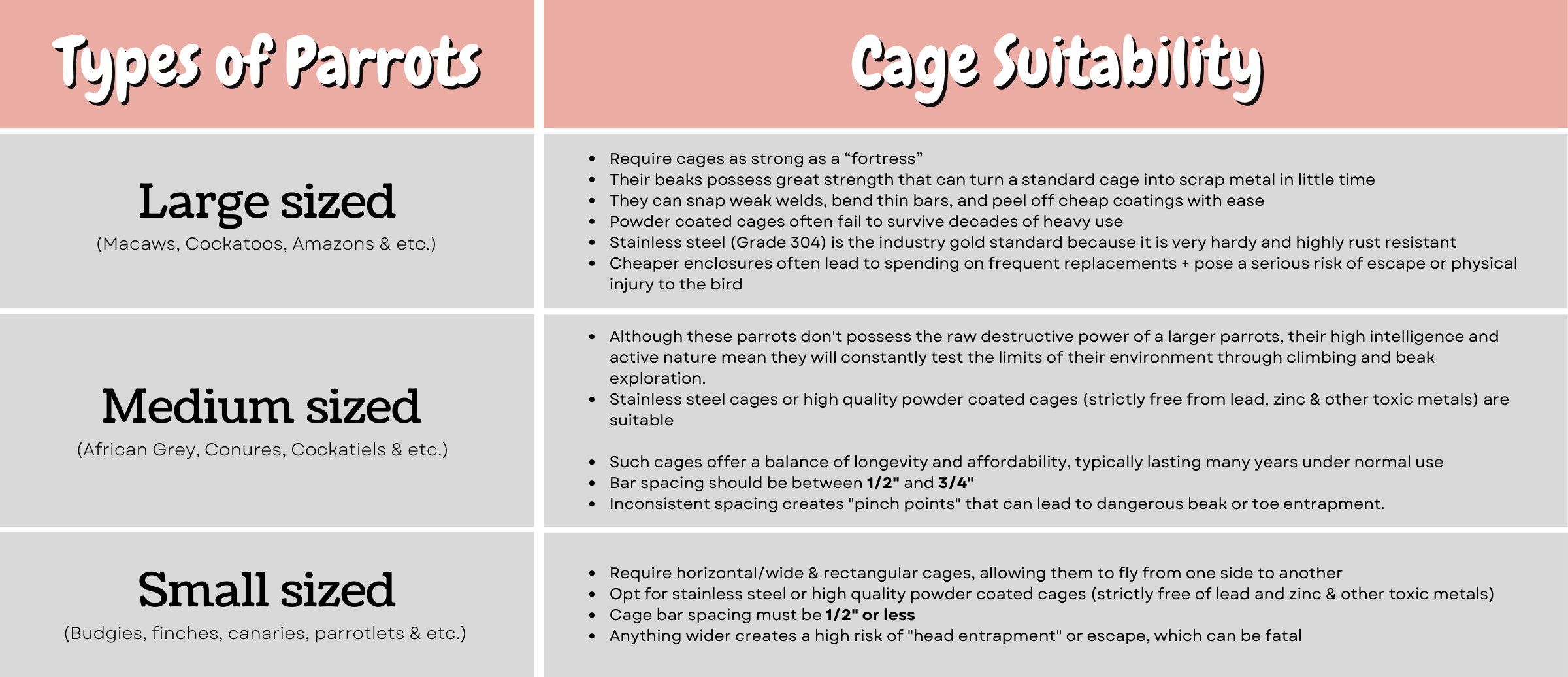
How to choose the right cage for my bird’s species?
My Galahs’ Cages
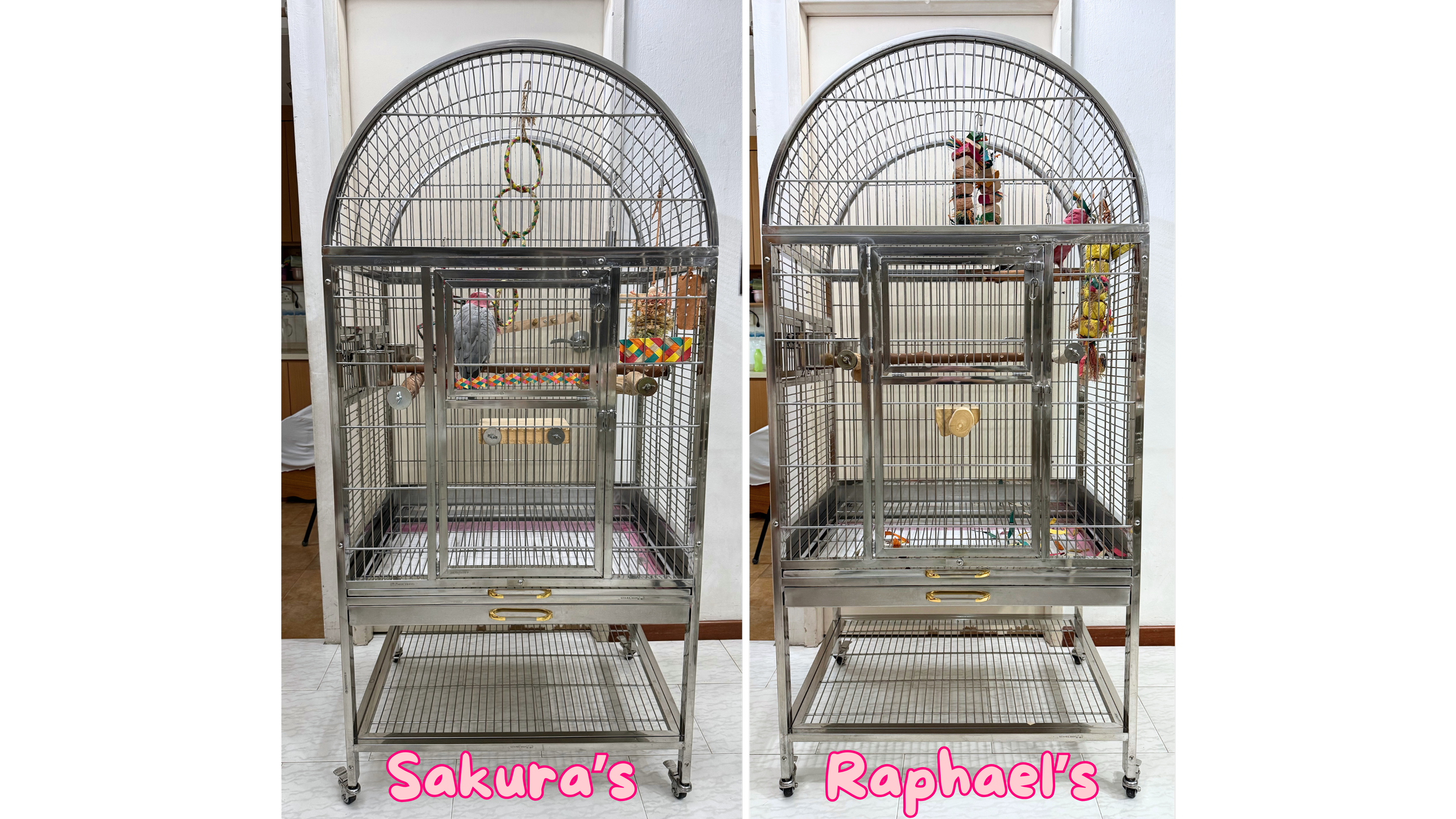
Sakura previously had a powder coated cage, but after a while, the coating came off due to her habit of repeatedly licking/nibbling the cage. Underneath the coating was cast iron which was terrible! Back then, I didn’t know that while some powder coated iron cages are sold, they are only safe if the coating remains intact, as rust or chipped paint can be fatal.
Luckily I noticed early and quickly ordered the stainless cages for both my babies, whew!
In conclusion,
If you’re able to afford a stainless steel cage for your parrot, definitely go for it! If you can’t, be sure to research and choose better quality cages that are rust resistant and do not contain toxic metals like lead and zinc. These are harmful to your birds. Always purchase from a reputable source and confirm the materials of the cage.
If your parrot has the tendency to nibble or lick the cage a lot, regularly check the cage to see if the coating has come off or not. You wouldn’t want your parrot ingesting the cage’s coating as it can cause a lot of problems. If you still can’t decide what type of bird cage to get, ask around in the fellow bird community, your avian vet or trusted pet store!
You can never be too careful. If you love your birbs, I’m sure you’ll do all you can to ensure their safety & happiness!
